“Can you engineer reliable autonomy with what you actually have, in conditions you actually face, on a budget that makes commercial sense?”
REKA began on 26 October 2013 as REKA Studios Enterprise, a small design studio in Kuala Lumpur. It turned to technology in 2014, and REKA Inisiatif Sdn Bhd was incorporated in September 2017.
Read our story ↗IndustryAutonomous mobility
HeadquartersKuala Lumpur, Malaysia
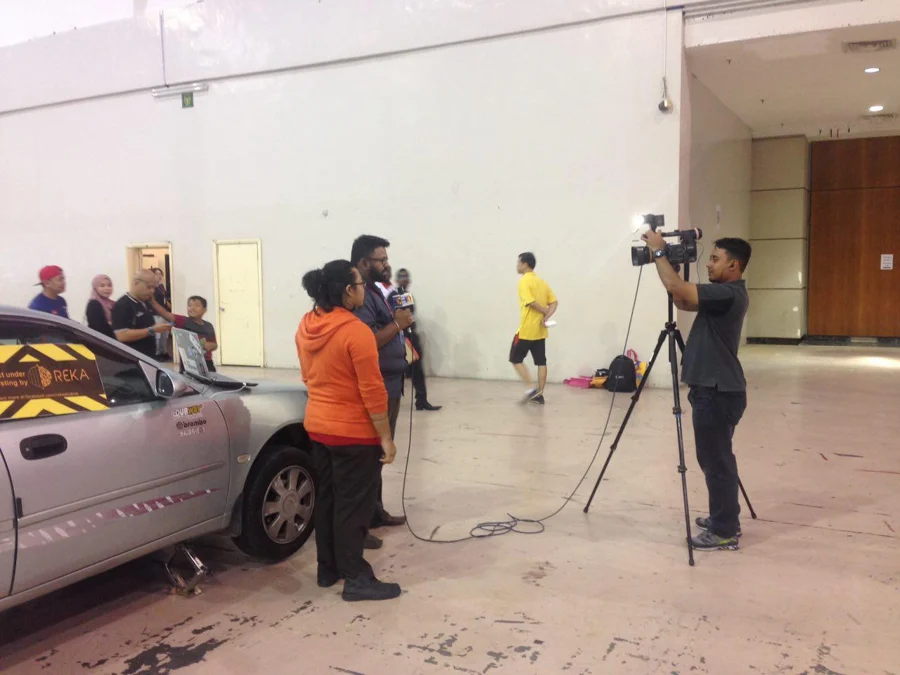
ResearchVisit Autonomous ↗In September 2016 REKA began building its own self-driving technology: a retrofit kit for an ordinary car. The first car, a Proton Waja, saw the road through one webcam, while motors, servos and REKA’s own electronics, including RIG, the development board REKA built to rival Arduino, turned the wheel and worked the pedals. REKA called the project CRETA. By the end of 2016 the car drove from Melaka to Kuala Lumpur with no one in the driver’s seat. Co-founder Haziq Faris spoke about it on Bernama TV at KLESF 2016.
Impact summary:- Malaysia’s first self-driving car, and the first in Southeast Asia on public highways, in 2016
- Melaka to KL on the PLUS Highway, on REKA’s own RIG board and autonomy stack
- Three generations of car, MK I to MK III, built with help from IMBiG, Kolej MARA Masjid Tanah, Elmlab, MIDA, NanoMalaysia and MARA
- Shown at NICE Expo 2017 with MARA and MARA Corp
- Public rides at the Malaysia Autoshow 2017, with MARii
- A member of the Autoware Foundation since 2024, on the open stack since 2021
Autonomy, with what you actually have
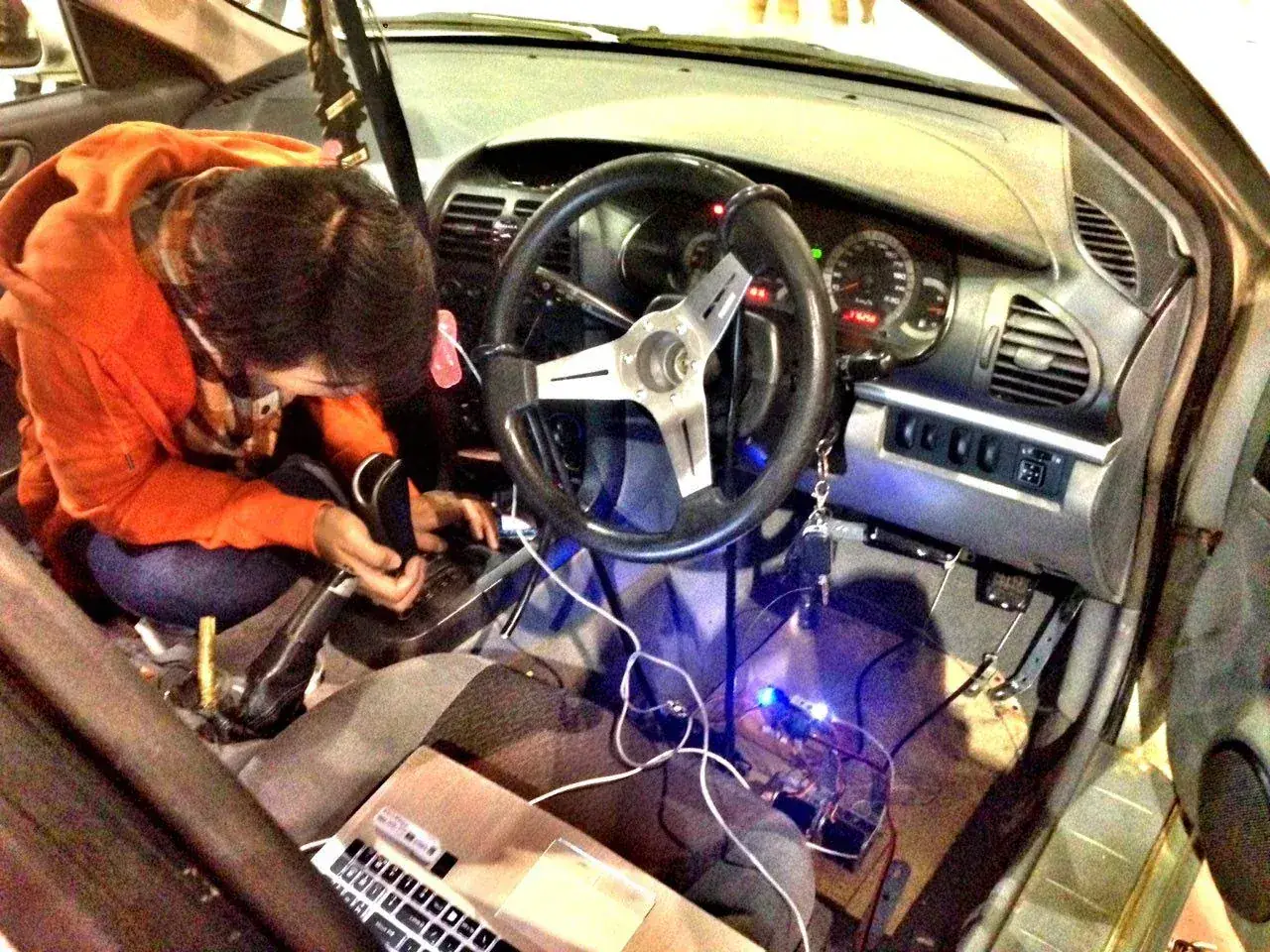
An ordinary car: a Proton Waja
The question REKA was answering was not “can a car drive itself?” That question was already being answered, expensively, by much larger organisations in other countries.
Our question was harder and more useful: can you engineer reliable autonomy with what you actually have, in conditions you actually face, on a budget that makes commercial sense? No purpose-built vehicle. No imported platform.
Answering it meant building from the root: our own silicon, our own sensor fusion, our own understanding of edge computing, real-time decision systems, spatial mapping, and what it means for a machine to know where it is and what to do about it.
We were not consumers of that knowledge. We produced it.
Building CRETA
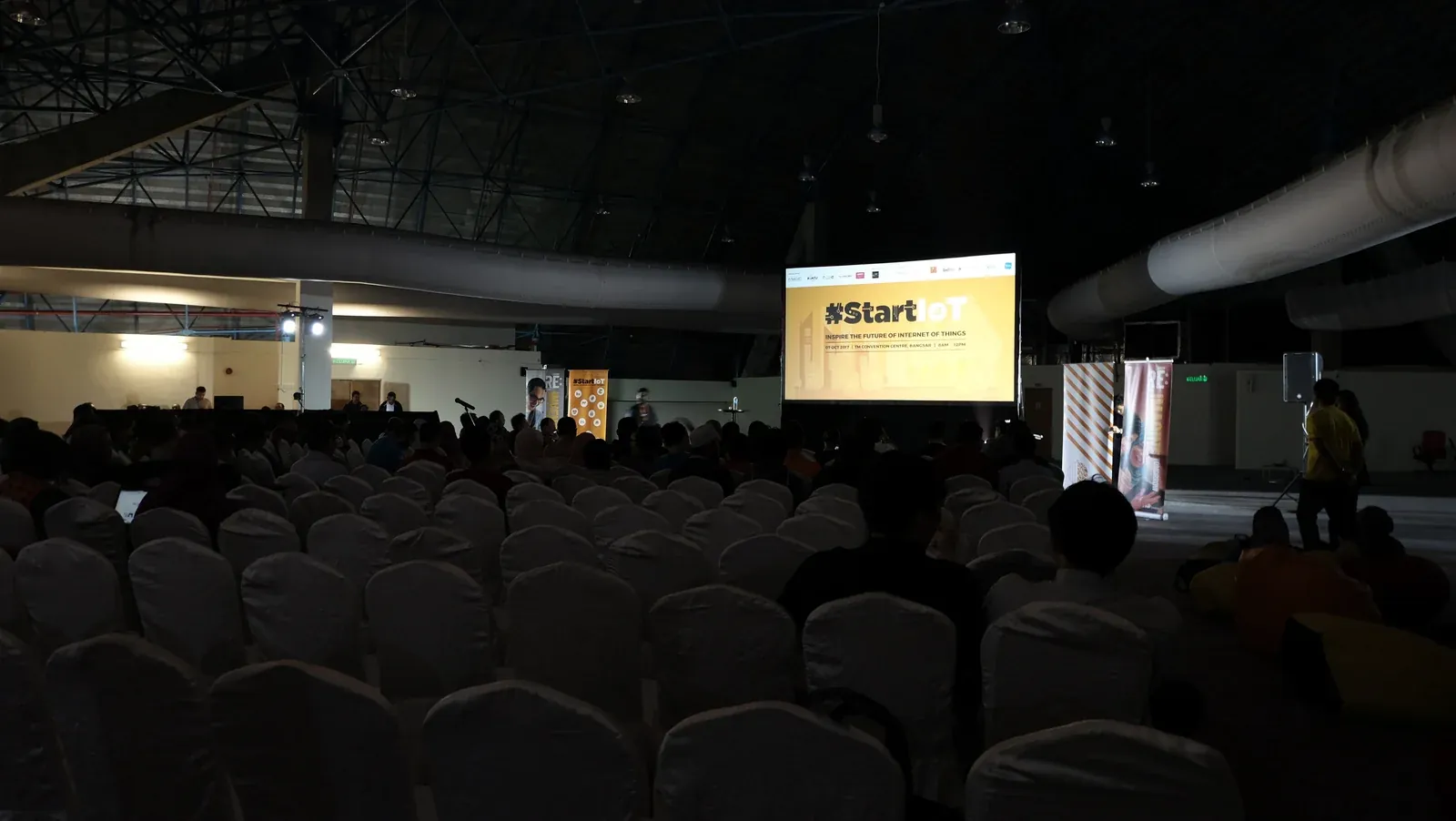
Through 2014 and 2015 the studio ran a lot of hands-on training in web development, Raspberry Pi and Arduino, the Internet of Things and mobile apps. Teaching others meant mastering each tool first, and that breadth, hardware and software together, became the base for the car.
In 2016 the team moved into early artificial intelligence: convolutional neural networks for images, optimisation, image processing and digital signal processing.
Then it built CRETA, over three generations of car. None of them was built for drive-by-wire, so REKA automated each one mechanically: motors and servos on the wheel and pedals, run by custom electronics that included RIG, the REKA Innovation Gear board and one of REKA’s earlier products.
- MK I (2016), a Proton Waja. One Logitech webcam.
- MK II (mid-2017), a Proton Inspira, courtesy of MIDA. One puck LiDAR and two webcams.
- MK III (late 2017), V1 and V2, two Proton Perdanas. A maroon one lent by NanoMalaysia Berhad and a white one from MARA (Majlis Amanah Rakyat), each with at least two puck LiDARs, two side radars and three cameras. On MK III, REKA also reverse engineered the braking and acceleration, using digital signal processing and its own algorithm. It was the most advanced of the three at the time.
Partners helped at every stage. IMBiG helped with metal fabrication, motors and actuation. Kolej MARA Masjid Tanah lent workshop space, workbenches, tools and expertise from its automotive department. Elmlab provided GPU computing and its electronics maker lab in Beranang. MARii gave the cars exposure at the Malaysia Autoshow, and MARA and MARA Corp secured the space to showcase CRETA at NICE Expo 2017.
Melaka to KL, on our own stack
ReadoutMelaka to Kuala Lumpur on the PLUS Highway, 2016. Hover or tap a place to read it.
By the end of 2016 the car, a Proton Waja, drove from Melaka to Kuala Lumpur on the PLUS Highway with no one at the wheel. It was Malaysia’s first self-driving car, and the first in Southeast Asia on public highways. MK II (mid-2017), a Proton Inspira courtesy of MIDA, and MK III (late 2017), two Proton Perdanas from NanoMalaysia and MARA, followed.
It was also the moment REKA stopped being a studio. In September 2017 the company was incorporated as REKA Inisiatif Sdn Bhd: same root word, a much larger initiative.
“We believe that this platform will create the talent pool in Science, Technology, Engineering and Mathematics (STEM) and generate the interest in those subjects” said Haziq Faris, Co-founder of REKA, in 2017.
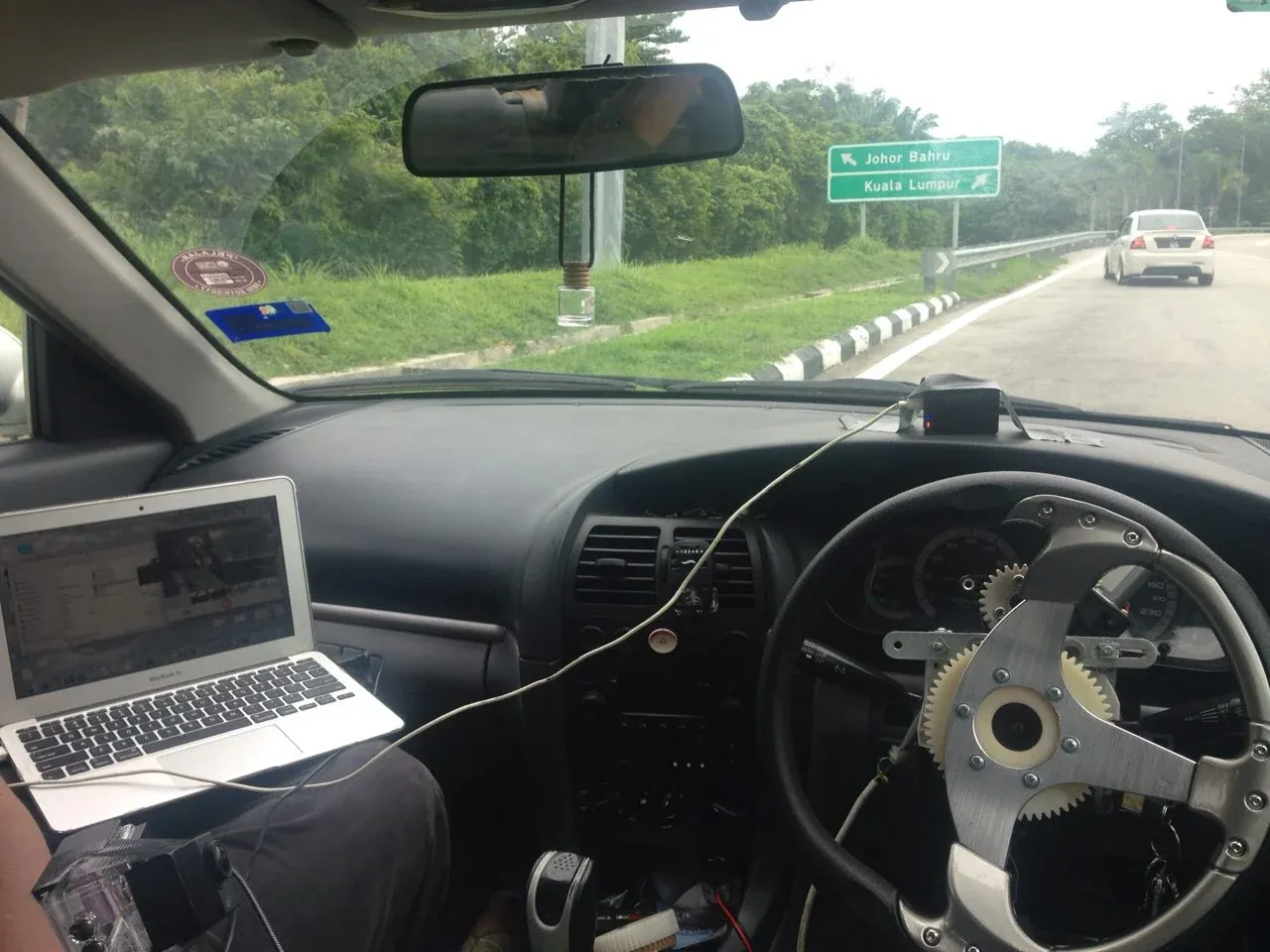
The press followed. Harian Metro told the story in December 2016, the New Straits Times ran “Driverless Dreams” in March 2017, and MBOT Techies carried a short journal of the project. All the coverage.
The first car to drive itself here was a local Malaysian car, retrofitted with the help of local talent from REKA and its partners.
The public takes a ride
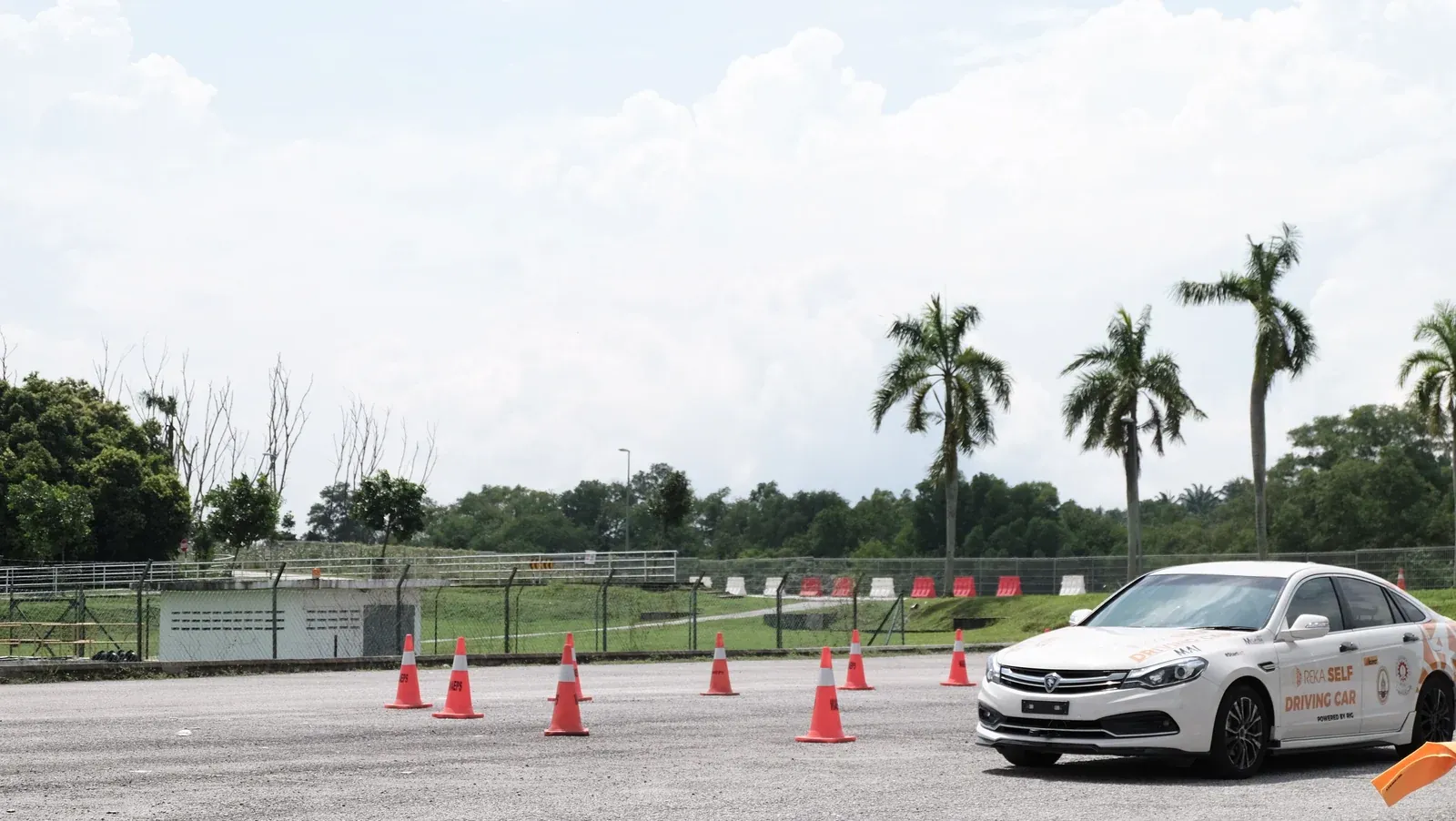
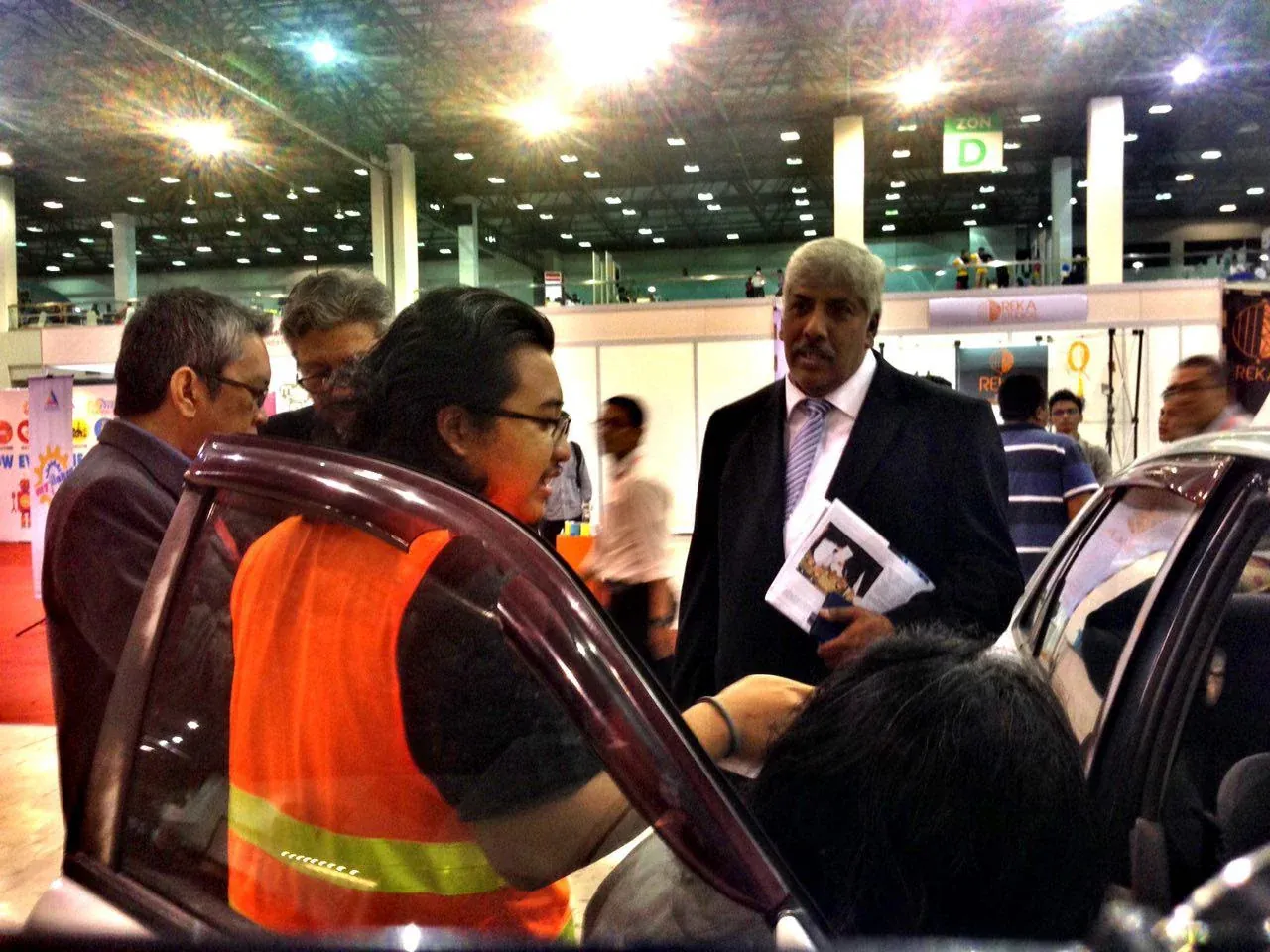
At the Malaysia Autoshow 2017, in collaboration with MARii, members of the public rode in REKA’s self-driving car. At NICE Expo 2017 in Bukit Jalil, REKA showed CRETA in space MARA and MARA Corp secured for the showcase, alongside NanoMalaysia Berhad, which also lent the maroon Proton Perdana that became one of the two MK III cars. Read the 2017 NanoMalaysia release.
At the Kuala Lumpur International Automotive Symposium 2017, Motion Digest reported that REKA was showcasing its self-driving car technology.
“We should start to encourage all Malaysian and let everyone know that Malaysia has the same technology like any other countries in the world” said Haziq Faris, Co-founder of REKA, in 2017.
From one car to a company
ReadoutHover a line of work to read where it came from; select it to open that capability.
The four lines in words
- Private Spatial Sensing From edge compute and sensing. The sensor fusion and edge inference work became a sensing platform that maps physical spaces without identifying anyone. Data never leaves the building.
- Applied AI for business data From computer vision and AI inference. Pattern recognition and real-time inference built for machines were repurposed to read patterns in business data and surface what actually matters.
- Automated workflows From telemetry and real-time systems. The architecture for monitoring a vehicle’s decisions in real time became the architecture for monitoring automated workflows, keeping humans in the loop.
- Robotics & Autonomous Machines From full-stack autonomy. The complete autonomy stack, hardware, perception, planning, and teleoperation, became a repeatable system for deploying autonomous machines in bounded domains.
The car worked. Bringing it to market was another matter: across the region the roadblocks were commercialisation, regulation, road and network infrastructure, market adoption and culture. So from 2018 REKA put its main effort into software automation, while the autonomous-vehicle work carried on.
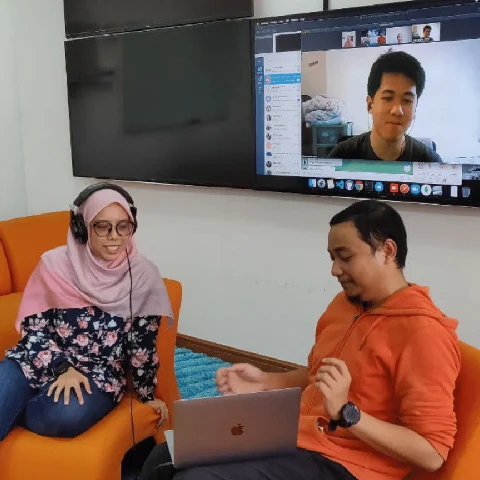
Every technology built for the vehicle found a second life in a different problem.
“This new shift in focus from Autonomous Vehicles to a wider scope of automation technology is aimed at helping organisations to go digital” said Haziq Faris, Co-founder of REKA, in 2018.