How much are you paying for floor space that people barely use? Primarily Wi-Fi sensing, which counts devices, not faces, extending to LiDAR, cameras and RFID where the use case needs them. Footfall, movement, time spent and repeat visits per space. A closed pilot.
Know how people use your spaces.
PLExyz uses modern wireless sensing to answer what you cannot see from a desk: how many people are in a space, where they move, how long they stay, and what sits where on a floor. Its Wi-Fi sensing counts devices, not faces. PLExyz began in REKA’s research and is now a sub-brand of AntaraX, with two product lines.
- Murata
- Brewhäus
- MedAds Media
- Mole
- Cyberview
What PLExyz solves
Space costs money whether anyone uses it or not, and most of it cannot be seen from where the decisions are made.
How many people, and where?
A hall full at one end and quiet at the other. Meeting rooms booked but empty. A café busiest the moment the music starts. PLExyz Crowd counts people per space, and how long they stay, without identifying anyone.
How is the space really used?
Leases are signed on headcount and assumption, and badge counters only see the door. PLExyz shows which rooms are used, when the peaks hit and which space sits idle.
What is where, and where next?
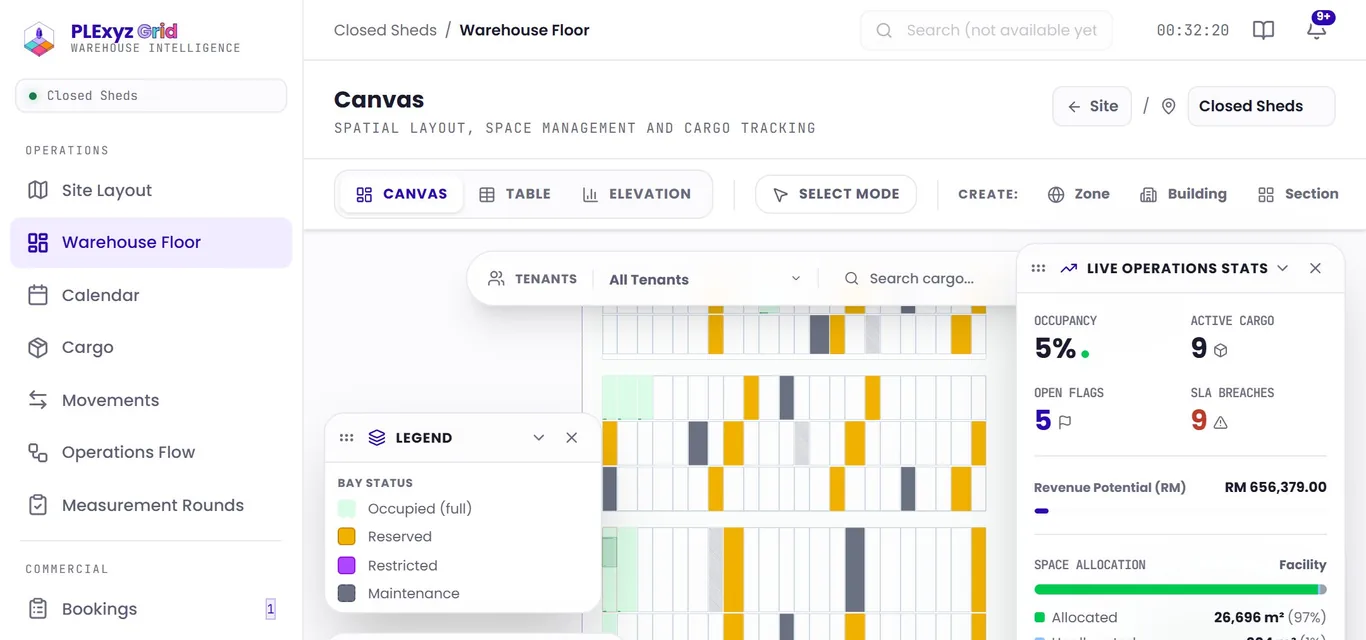
In a warehouse or yard, the list says one bay and the cargo sits in another. PLExyz puts every space on the site’s own layout and ranks where the next load should go.
Privacy comes first: PLExyz Crowd’s Wi-Fi sensing counts devices, not faces, and records no video of anyone. Cameras join only where a project calls for them.
Where PLExyz came from
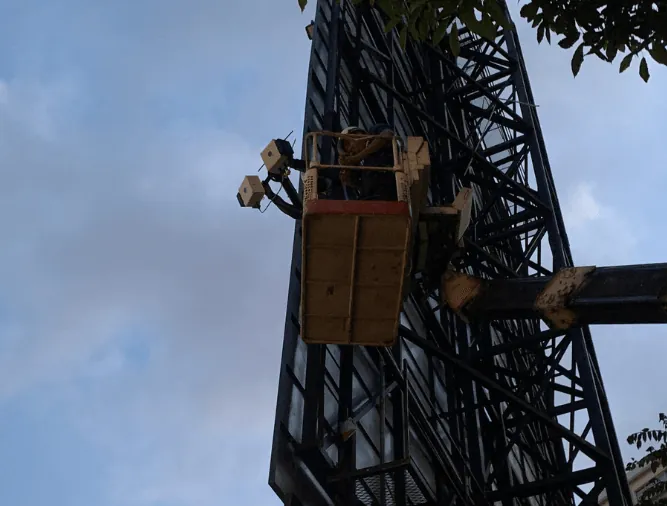
PLExyz grew out of REKA’s Harmonik sensing research. Its roots are the sensors and edge computing REKA built for its 2016 self-driving car, run by RIG (REKA Innovation Gear), REKA’s own development board, built to rival Arduino and, by REKA’s account, the smallest with GSM on board at the time. From 2019 that know-how went into smart-city sensing with Murata, counting traffic in Cyberjaya.
After RIG, PLExyz was the first IoT, AI and software-as-a-service product REKA launched. PLExyz Crowd Analytics arrived in 2021 as Wi-Fi based sensing, built to complement Murata’s traffic counting. Today it is a sub-brand of AntaraX, with its own spatial technology.
- 2016RIG and the self-driving car. The sensors and edge computing that PLExyz grew from.
- 2019–2020Smart-city sensing with Murata. Traffic counting localised for Malaysia, starting in Cyberjaya.
- 2021PLExyz launches. The Murata partnership is announced in March, and PLExyz Crowd Analytics arrives as Wi-Fi based sensing alongside Murata’s traffic counting.
- 2022Recognition. The sensing work was recognised by Frost & Sullivan for Best Crowd Analytics in 2022.
- 2023In cafés and clinics. Crowd counts at Brewhäus in Seremban, and audience analytics for MedAds Media’s clinic screens.
- 2026A sub-brand of AntaraX. PLExyz Crowd and PLExyz Grid move to AntaraX.
What PLExyz became
A sub-brand of AntaraX with its own spatial technology: sensing how people use a space, and mapping what fills it.
How much warehouse space are you paying for that nobody can see is empty? A facility on its own layout, from zones down to spaces, with live occupancy and a ranked answer for where the next load goes. Free for one facility.
PLExyz’s spatial technology
More than Wi-Fi. Each kind of sensing runs on its own or together with the others. Vision, RFID and LiDAR are live, deployed on a project basis.
Wi-Fi
Detects Wi-Fi-enabled devices within about 50 metres of each unit, for footfall, movement and time spent. Wi-Fi sensing works through walls, so one unit covers more than one room. Wi-Fi tags locate people and assets that carry them.
RFID
Shows which assets are present, with passive and active tags, reading many tags at once. Live, deployed project by project.
LiDAR
Counts people and vehicles, and builds 3D maps of a space for a digital twin. Live, deployed project by project.
Vision
Camera AI that reads actions and movement. Live, deployed project by project where a site calls for it. It is a separate choice from Wi-Fi counting, which uses no camera.
For work and operations
A dashboard for workers and assets, tags and devices: how work flows, how equipment is used and maintained, how people and machines move safely around each other, and how accurate the inventory is.
Connected to the rest of the site
PLExyz data can feed access control and visitor management, inventory updates, logistics and robotics scheduling, safety monitoring, sustainability scoring, and location and map services.
Same headcount. One of them keeps your face.
A camera and PLExyz Crowd’s Wi-Fi sensing can both tell you six people are in this room. Flip between them, and watch what else gets captured along the way. Wi-Fi sensing counts devices, not faces, and records no video of anyone.
6 people detected across 3 zones
A camera6 peopleAnd every face, on video
PLExyz Wi-Fi sensing6 peopleNo faces. No video recorded.
Illustrative. The headcount is identical either way; the difference is everything captured alongside it.
PLExyz in the wild
“We finally knew which hall was full and when.”
- Brewhäus, a café in Seremban, hosts live music, projection mapping and art installations. PLExyz counts how many people come, where they gather and how long they stay, without revealing anyone’s identity.
- MedAds Media measures viewers, dwell times and peak engagement for its screen ads in clinics across Kuala Lumpur.
- Mole works with AntaraX to provide event technology for organisers, at sense.mole.is.
- Murata traffic counting, localised in Malaysia with REKA, which PLExyz was built to complement. Read the case study
- The sensing work behind PLExyz was recognised by Frost & Sullivan for Best Crowd Analytics in 2022.
PLExyz, now part of AntaraX


PLExyz is an AntaraX sub-brand that grew from proven REKA research. You get PLExyz Crowd and PLExyz Grid from AntaraX.
REKA explores, researches and engineers. When work proves repeatable, AntaraX productises, deploys and scales it, and PLExyz made that move. REKA still does the custom sensing work no product covers yet: talk to us if your problem is one of those.